Review: Tanghalang SLU’s ‘Huling Liham’ is a Grounded, Hard Hitting Triumph
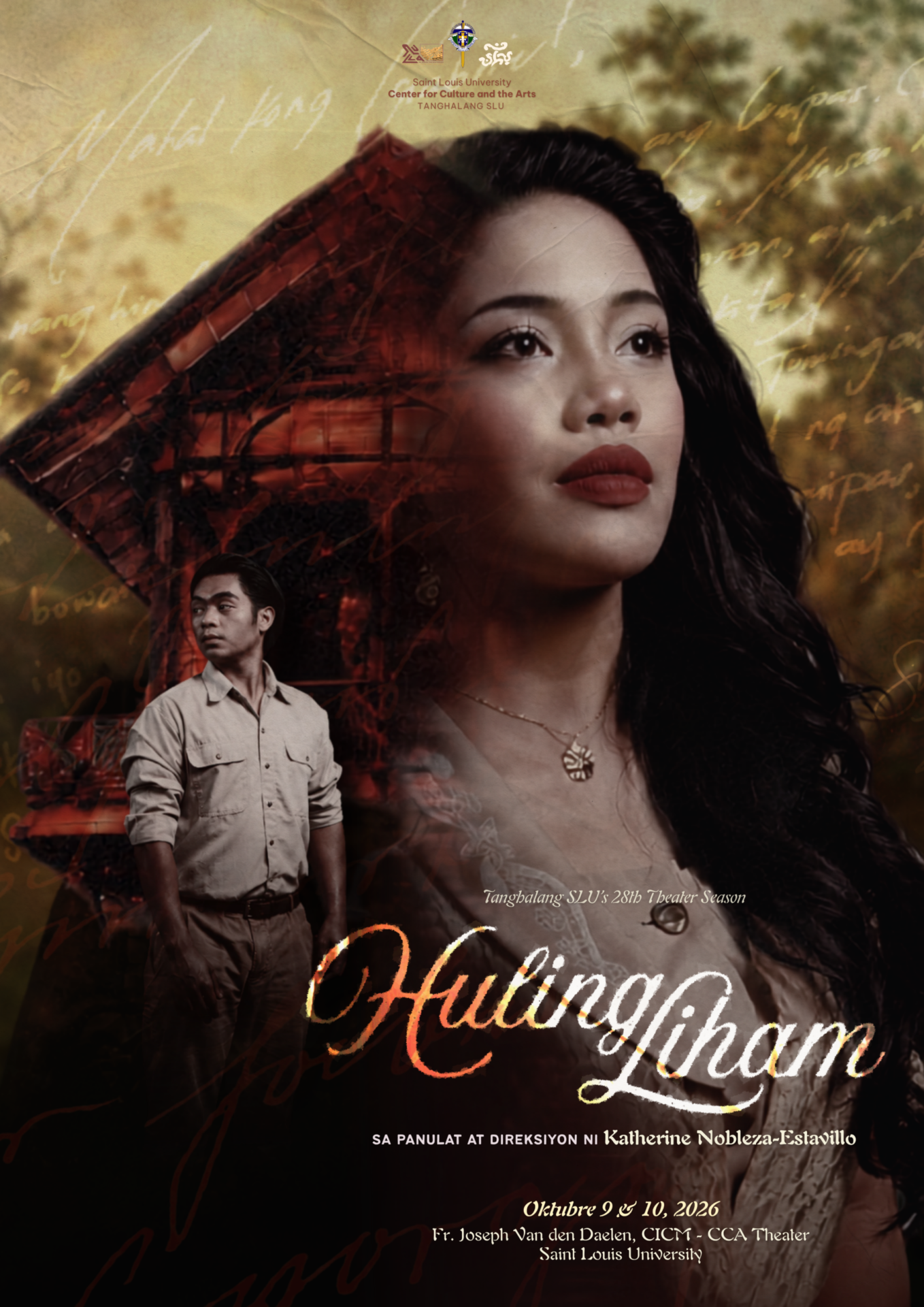
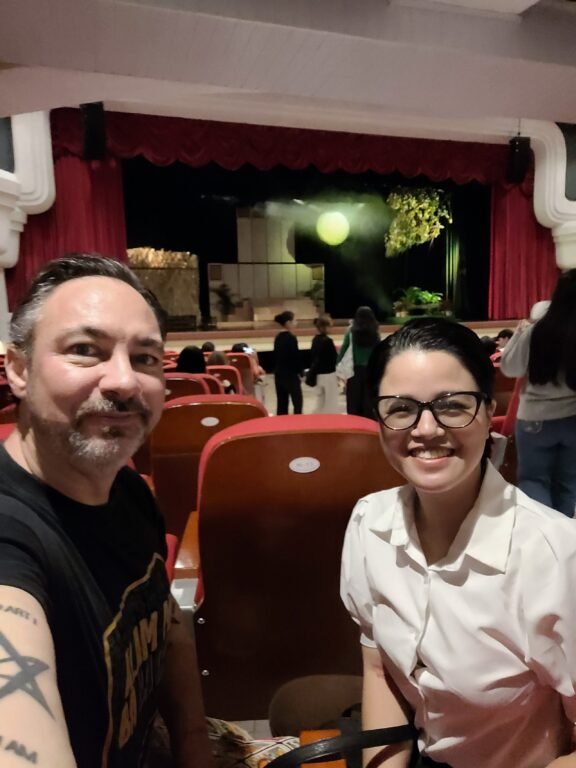
Watching Huling Liham in part through my phone’s camera, and my own lens as a novice actor (at Altomonte Studio’s Acting 101 For Adults) gave me a uniquely raw perspective on what proved to be a highly demanding student production.
Marking Katherine Nobleza-Estavillo’s final production as playwright, director, and production manager for Saint Louis University’s resident theater company, the play was a heavy, calculated look at wartime history.
The local anticipation was clear; after opening on October 9, 2026, the final two shows on October 10 completely sold out. Given that my viewing was the matinee and curtain up and class schedules didn’t align perfectly the theater was filling as Act 1 was under way, those latecomers were met with a production that treated a sensitive subject matter with maturity.
A Measured Approach to Heavy History
The synopsis frames a story of love, loss, and the painful silence of war; “Ano ang naiiwan kapag ang taong hinihintay mo ay hindi na kailanman makauwi?”.
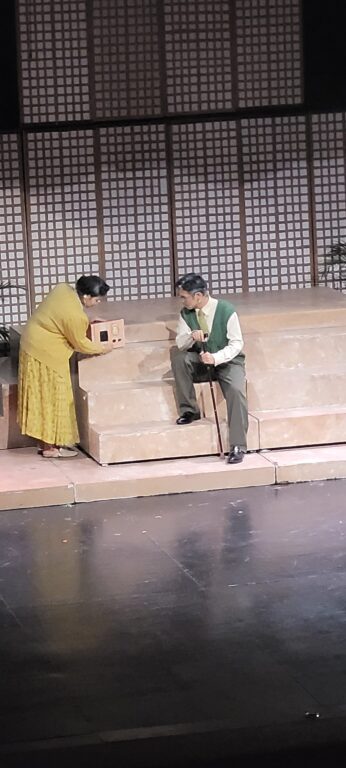
What unfolds on stage is a blunt exploration of wartime atrocities that does not shy away from historical reality.
The narrative centers on the romance of Leonora and Gabriel, two lovers who confess their devotion just as the war descends upon the Philippines.
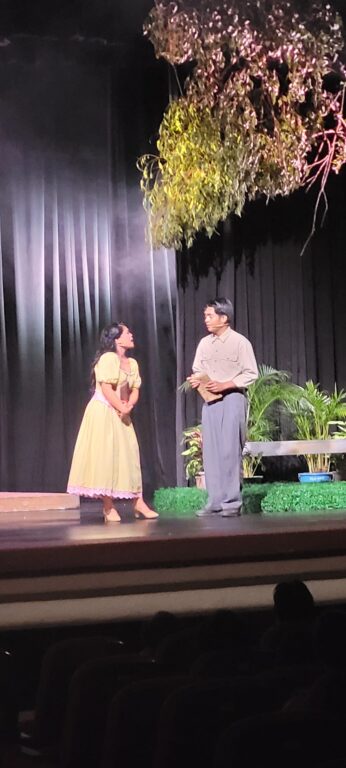

After Gabriel leaves to join the esistance fighters, Leonora’s life is upended. Both Leonora and her younger sister Luna are abducted by Japanese soldiers and forced into sexual slavery as a “comfort woman” in Batangas.

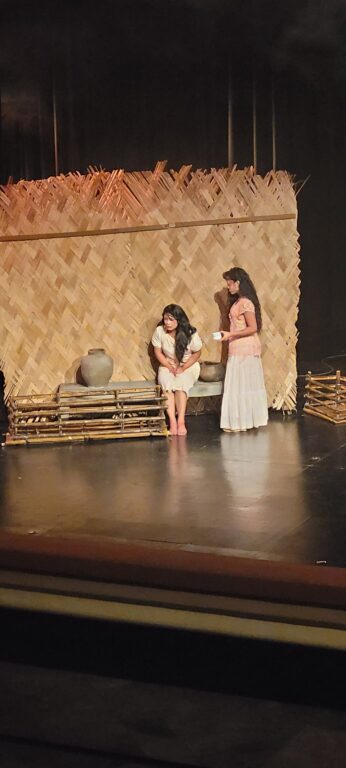
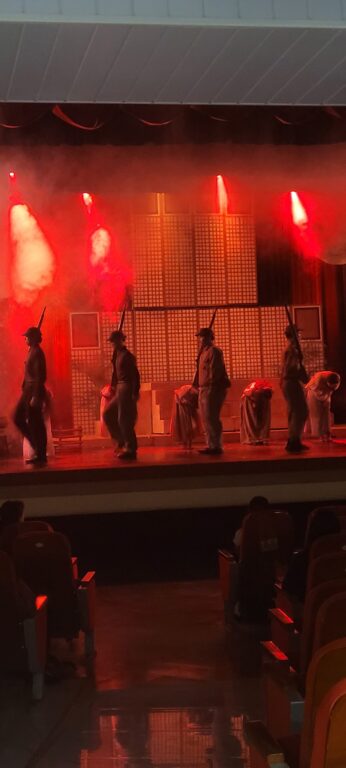
The play confronts the horrors of the Japanese occupation directly. Members of teh audience were visibly affected by the vivid portrayals. The production included intense scenes of rape, execution, murder, and battlefield combat.

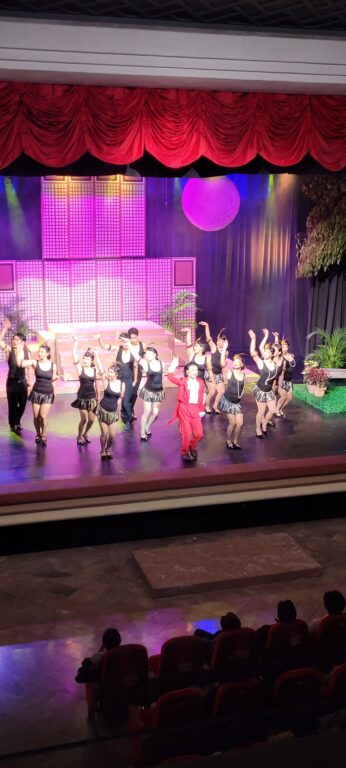
To somewhat balance the crushing weight of the historical trauma, the production introduced a structured 1940s jazz club dance number that offered a brief contrast to the looming dread. The performing troupe’s lead, Santi, returned later as de facto leader of the comfort house, but their “softly-softly” approach did not spare them as the story unfolds.

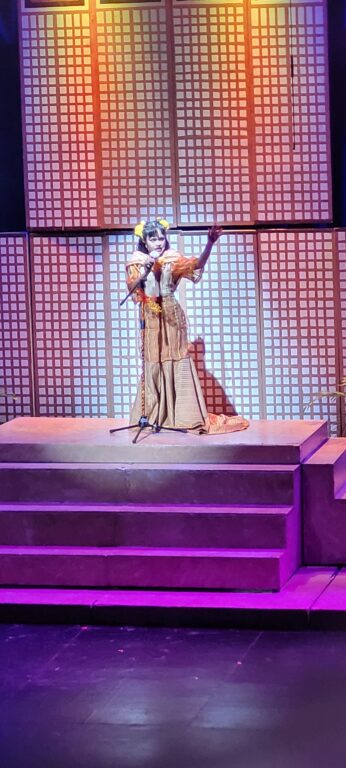

Huling Liham avoids a neat, happy ending. The titular “final letter” arrives strategically at the very end of the war, driving home the reality that even in victory, the impact on civilians is permanent.

As the curtain fell, the emotional weight was grounded by real-world interview clips of the surviving comfort women, the “Malaya Lolas”, anchoring the fictional drama to actual history and modern day parallels.

Disciplined Performances and a Breaking Point of Tension
Zooming in to the actors, I noticed the steady focus and emotional control the graduating SLU students brought to their roles. The chemistry between the leads effectively communicated their eventual separation. The central characters of Leonora (Chelcee Khate B. Dumawat) and Gabriel (shared by Kurt Vincent L. Tamayo) were anchored with steady, reliable performances.
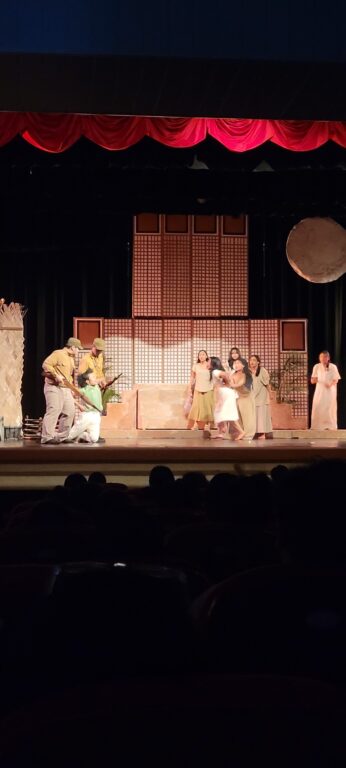
The build-up of systemic oppression within the narrative created a palpable, claustrophobic anxiety in the theater. This thick tension reached a boiling point when Leonora led a desperate rebellion against the Japanese forces within the pleasure house. The release of collective frustration was so intense that the crowd actually leapt from their chairs, breaking the somber atmosphere with loud cheers. Capturing that sudden burst of movement from the audience alongside the action on stage was a standout moment of the night.
The supporting cast gave this historical gravity its structure. Notable contributions came from the dynamics brought by Andres (Jaymar G. Sudicalan), and the localized conflicts involving characters like Kuling (Mario B. Deles II), Piling (Louisse An Cassandra M. Ortiz), Luna (Triane Aishly Almuete), and the Japanese Tenyente played by Jlord Zyril Lumiqued.
All the actors portraying the Japanese forces and the ensemble of comfort women ensemble handled the highly sensitive, difficult scenes with necessary restraint and theatrical discipline. Here, the wailing cries and outpouring of grief was grounded in reality and far from teleserye melodramatics.
Consistent Production Value and Audience Support
From a media standpoint, the technical execution was clean and well-paced. The production value was solid throughout the run. JM Janssen Poyaoan managed both Lighting Design and Sound Design/Engineer duties, creating a controlled atmospheric tension.
The deliberate shifts in light and sound guided the transitions from quiet, tender moments to combat and somber isolation, which complemented Micaella Mae Casido’s versatile set design.
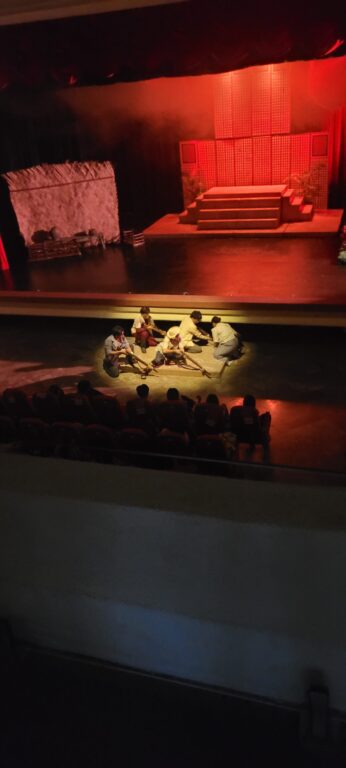

Tanghalang SLU also made a visible effort to manage the heavy psychological weight of the play for the audience. Under the management of Head Stage Managers Corinne Julia Pugliatty and Cassandra Jullia Serrano, front-of-house operations ran smoothly. The crowd was monitored by attentive ushers who kept watch for distressed viewers, quietly providing assistance to those affected by the graphic content. This level of logistical care allowed the theater to present difficult themes while maintaining an organized, safe space for the community.
The Verdict
Huling Liham stood as a disciplined, serious piece of local university theater. It honors the history of the comfort women while raising valid points about historical memory and civic responsibility. Director Katherine Nobleza-Estavillo and her graduating cast delivered a focused, unforgettable final production that respects the weight of the history it depicts.
Tanghalan SLU aims to bringing more quality theatre to Baguio audiences. Any play produced with similar values should be considered one not to miss